

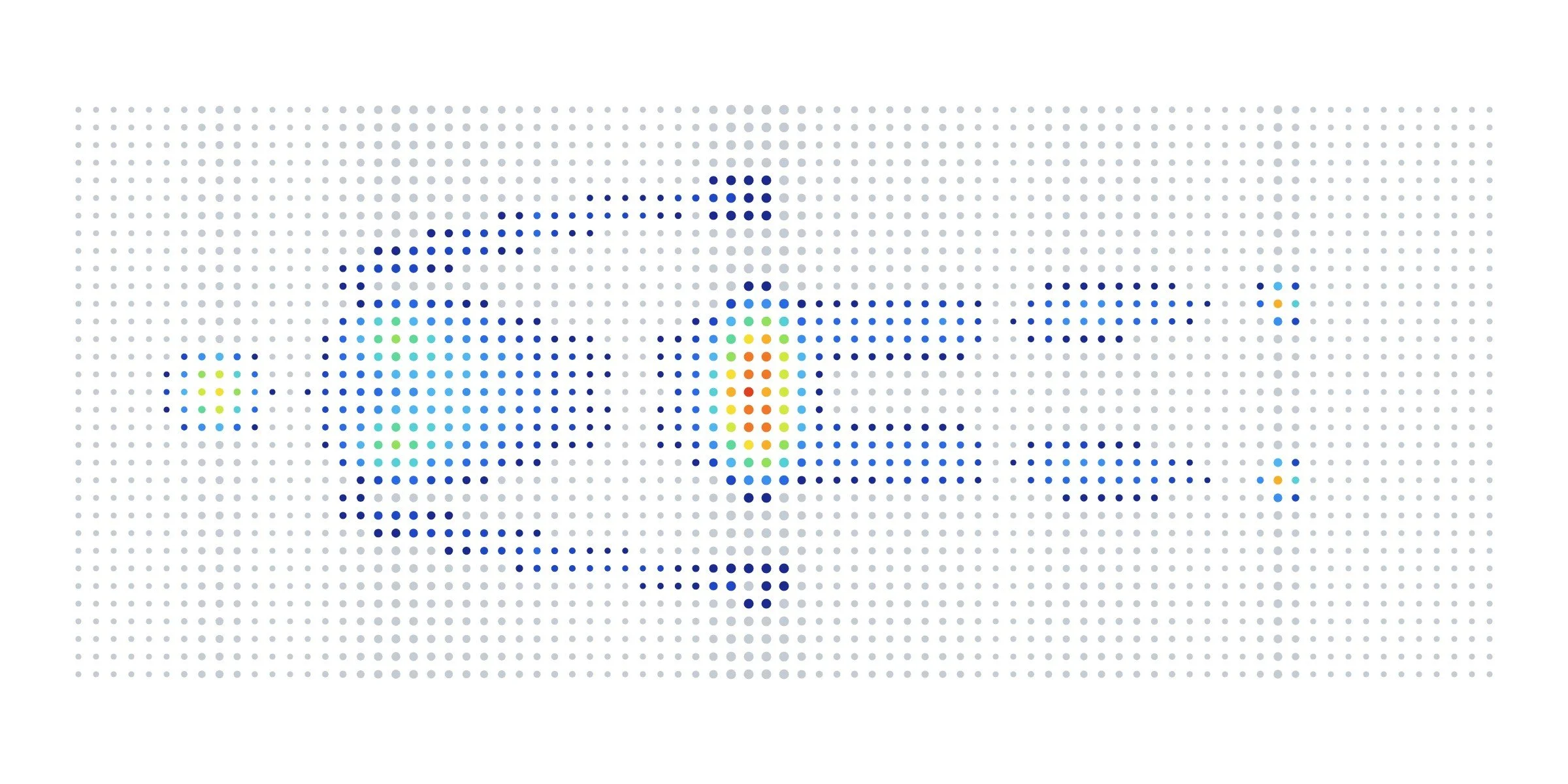
Representative data from a body model. Study data is proprietary to Purple Innovation, LLC.
COMPUTATIONAL VALIDATION
Designing a mattress from the spine out.
How firm should a bed be, and where? This project built a computational validation system to answer that from human data instead of intuition. Pressure maps of sleepers across a range of body sizes were converted into depth maps through each prototype's pressure–displacement curve. An algorithm found the shoulders, hips and spine band, extracted the spine curve, and scored it against each participant's own neutral spine using dynamic time warping. The same loop then generated the design: every stub in the square gel grid was sized from the heat map, the grid was simplified into head-to-foot zones, and the zoned bed was put back through the simulation and re-scored until it held the spine best.
The method mirrors the study; the interactive code hosted on GitHub was developed with the assistance of Claude.
THE LOOP
Measure the body with 64 × 160 XSensor pressure maps on every prototype. Model the material with each stub size's pressure–displacement curve. Simulate the sink: pressure to depth, then the shoulders, hips and spine band. Validate the spine: a 9 × 9 median spine curve against the measured neutral curve, scored 0–100 with DTW. Size every stub from local pressure, up to a load limit that spreads extra load to its neighbours. Then zone the bed and validate it again.
THE RESULT: A ZONED BED
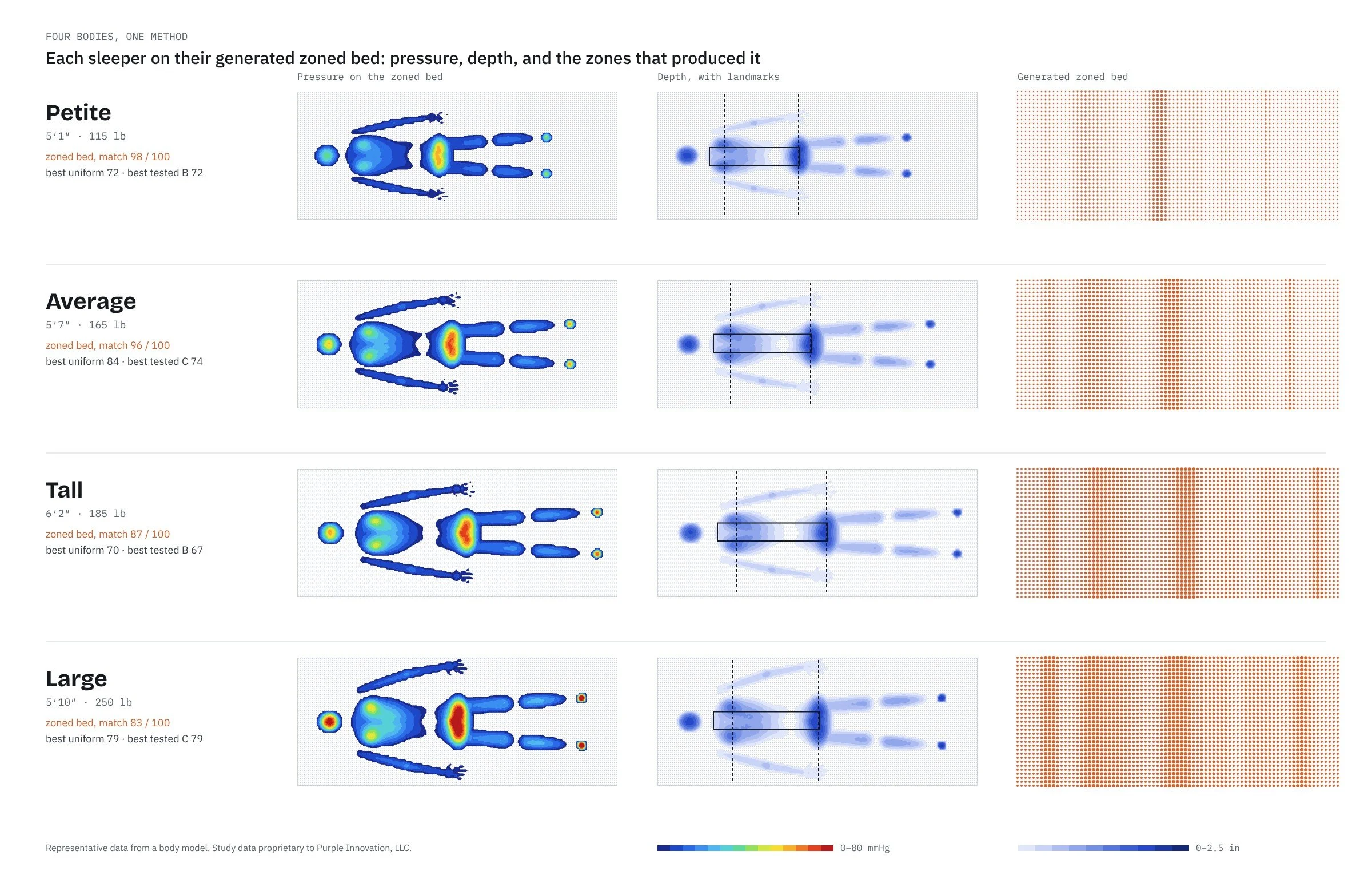
Each column across the bed takes the 90th percentile of its stub sizes, turning the body shape into head-to-foot zones that can be molded. Re-simulated and re-scored, the zoned bed scores 83–98 out of 100 in the representative data, against 67–79 for the best tested prototype. Four bodies, one method: each sleeper on their generated zoned bed.
METHOD
The study's analysis pipeline was rebuilt for the web with a physics-based body model, so every map, curve and score on the interactive page is computed live in the browser.
Depth: each sensor through the bed's pressure–displacement curve. Score: 100 when the spine stays within the repeatability of the neutral measurement, 0 when it drifts well out of shape. Stub rule: stubs grow with pressure to a 45 mmHg limit, then share extra load with their neighbours. Zoning: the 90th-percentile stub per column, with the base stub swept until the zoned bed scores best.